The Dark Parts of the Map
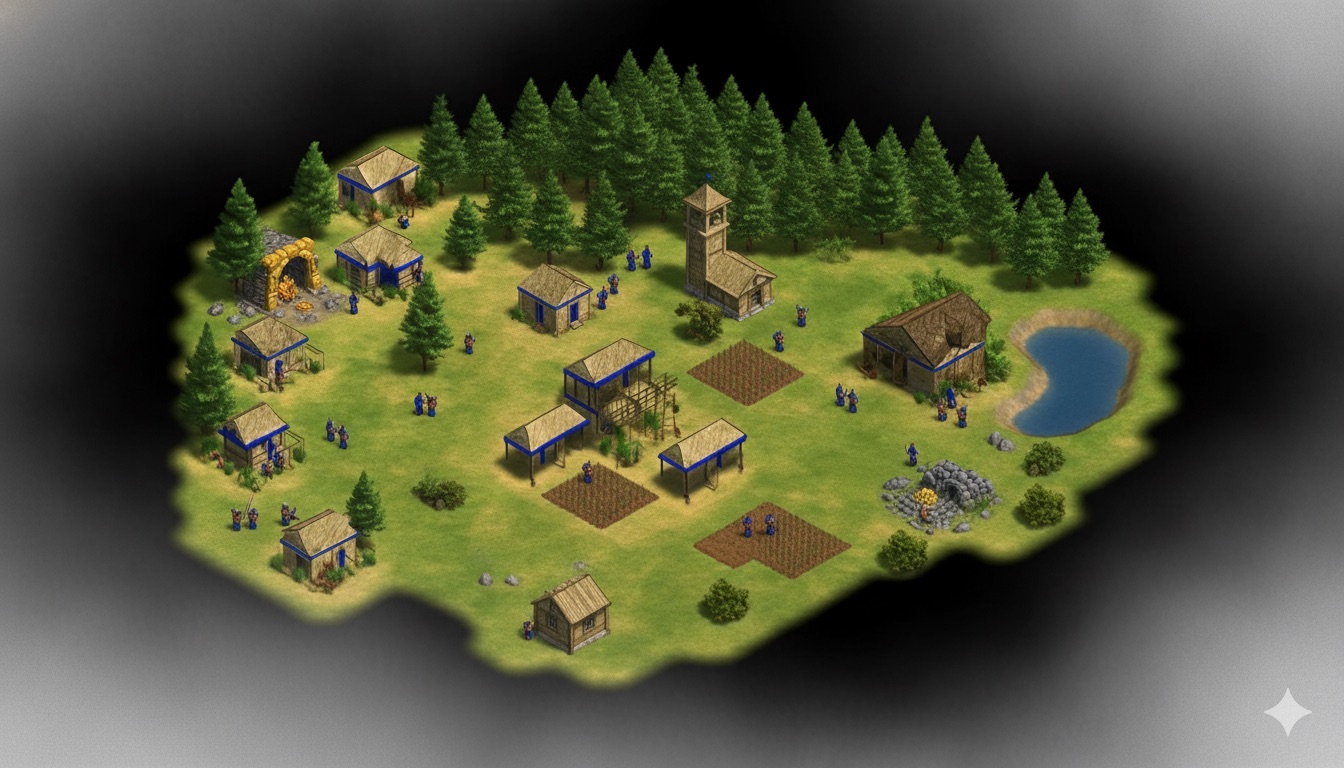
When I was younger, I spent hours playing Age of Empires with my dad. He was a market trader on the street markets in Liverpool, out working almost all the time, trying to get his family out of poverty. Dad time was thin on the ground. That game is where we found it, the two of us sat in front of a screen for whole evenings.
If you have never played it, the setup is simple. You start with a town center and a handful of villagers. They mine gold, chop down trees, and farm animals. You build barracks, train soldiers, develop technology, and the settlement grows into something.
The part I still think about is the map. When the game starts, nearly all of it is black. You can see the ground your own villagers are standing on and nothing beyond it. That blackness is just everything you have not walked yet. March a villager into it and the dark burns back in a circle around them, and there is terrain, gold you had no idea was there, a river, a whole region you had been making plans without.
That is the picture I use for AI now.
What most people buy AI for
Watch what happens when someone opens an AI tool for the first time. They ask it to write the email, tidy the proposal, summarize the call notes, and draft the LinkedIn post they were going to write anyway in a fifth of the time.
All of that works. I am not going to pretend it doesn't. Time comes back, and for a coach running a practice single-handed, time coming back is a good thing.
But look at what every one of those requests has in common. You already knew the task needed doing, and you knew roughly what a good version looked like. The AI ran faster across ground you had walked a hundred times.
Speed applied to known work has a ceiling, and the ceiling is you. It can only ever hand back a quicker version of what you already thought to ask for. If your picture of your own business is the visible circle on the map, efficiency polishes that circle without making it any bigger.
Two kinds of not knowing
There is a category of things you don't know. You could list some of them right now, like how to price a group program, what your churn looks like, or how to write a proper email sequence. Those are answerable. You can search for them, buy a course on them, ask a peer.
Then there is the other category. The things you do not know that you do not know. You cannot search for those, because searching requires a word for the thing, and you don't have one. They do not show up as questions. They show up years later as the reason something did not work, and by then you call it bad luck or bad timing.
That is the black part of the map, and most of the opportunity in any business is sitting in it.
Marching a villager into it
The move is a different kind of request from the ones above.
Instead of handing AI a task, hand it your situation and ask it what you are not seeing. Give it the raw material about how you work, who you serve, what you charge, what you have tried and what stalled, along with the notes from your last twenty client conversations. Then ask the questions that have no fixed answer. What patterns are in this that I would not spot from inside it? Where is the demand I am not serving? What am I assuming here that might not be true? What would someone who has run this kind of practice for thirty years see in these notes that I cannot?
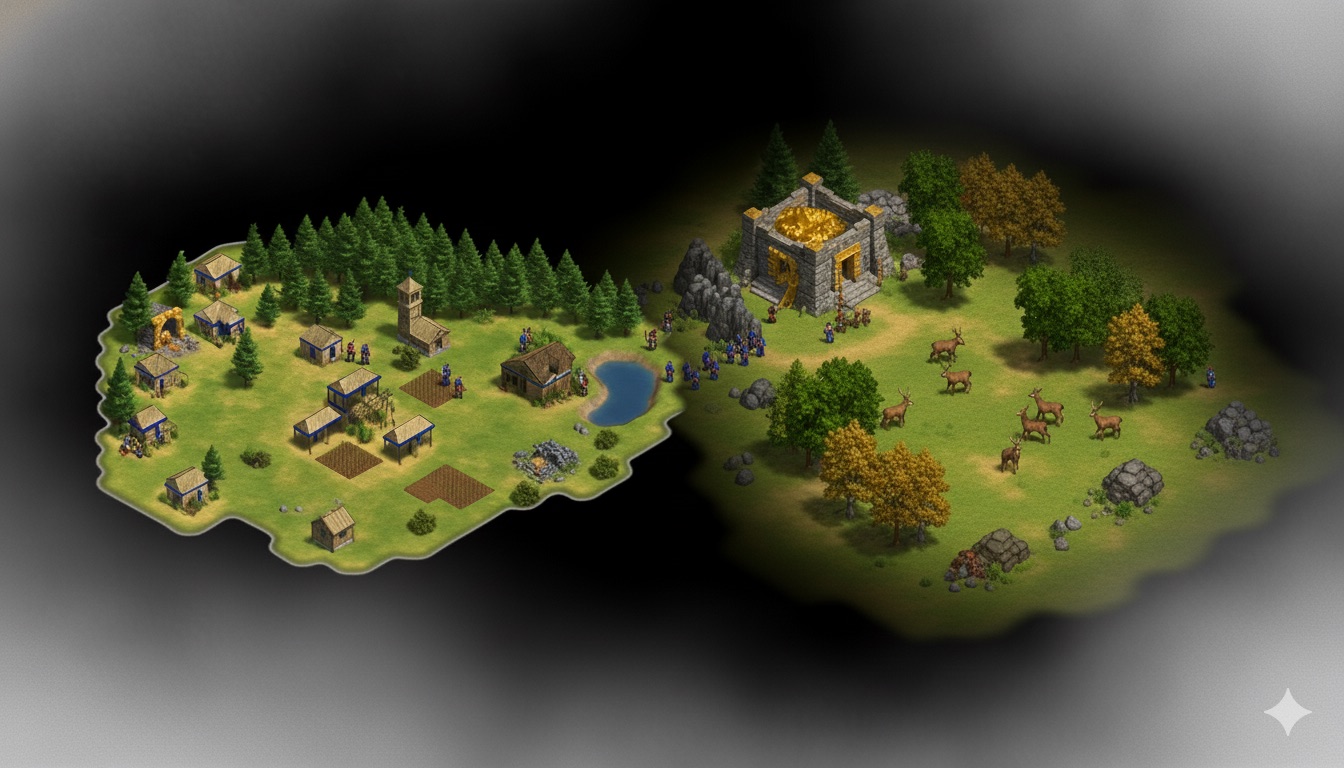
What comes back is terrain, and you should treat it as terrain rather than as an answer. Options you had no name for, a group of clients you had been treating as outliers who turn out to be a market, a version of your work you never considered because it sat outside the lit circle.
You still decide what to do with it. The villager does not conquer anything. It just makes the ground visible so you can choose.
Henry Ford is supposed to have said that whether you think you can or you think you can't, you're right. I have quoted that line for years, and I understand it differently now. What you think is possible tracks how much of the map you can see. Widen the map and the set of things you can believe in gets wider with it, without anyone having to give you a pep talk.
The limit
AI cannot show you ground it has no way of reaching. Feed it three lines about your business and it will hand you three lines of generic terrain that could belong to anyone. The villager reaches only as far as what you give it, your own words and numbers and client language, written down somewhere it can read.
That is the unglamorous part, and it is the part that decides whether any of this works. Most people have none of their business written down anywhere outside their own head. Until it is written, the AI is standing in the same small circle you are.
Treat it as a partnership. The AI turns up possibilities. Deciding which of them is worth your one life stays with you, and that judgment matters more as the map gets bigger.
Try it on the thing you are most sure about
Pick the part of your work you feel you understand best. Your ideal client, your core offer, the reason people say yes, the area where you would confidently tell someone how it works.
Gather what you actually have on it. A summary written from memory in five minutes only re-describes the lit circle, so pull the real material, the transcripts, the testimonials, the discovery call notes, the emails where someone explained what they were struggling with in their own words.
Then ask one question. What is in here that I am not seeing?
Sit with what comes back before you judge it. Some of it will be obvious, and some of it will be wrong. Somewhere in there will be one thing that stops you, because it was true and it was sitting in your own material the whole time.
The efficient use of AI gives you back an afternoon. This one gives you new options you did not know you had. New ways of seeing the world. New ways of thinking. This to me is the little-discussed gift this non-human intelligence brings to the table.