You're Still Using AI Like a Horseless Carriage
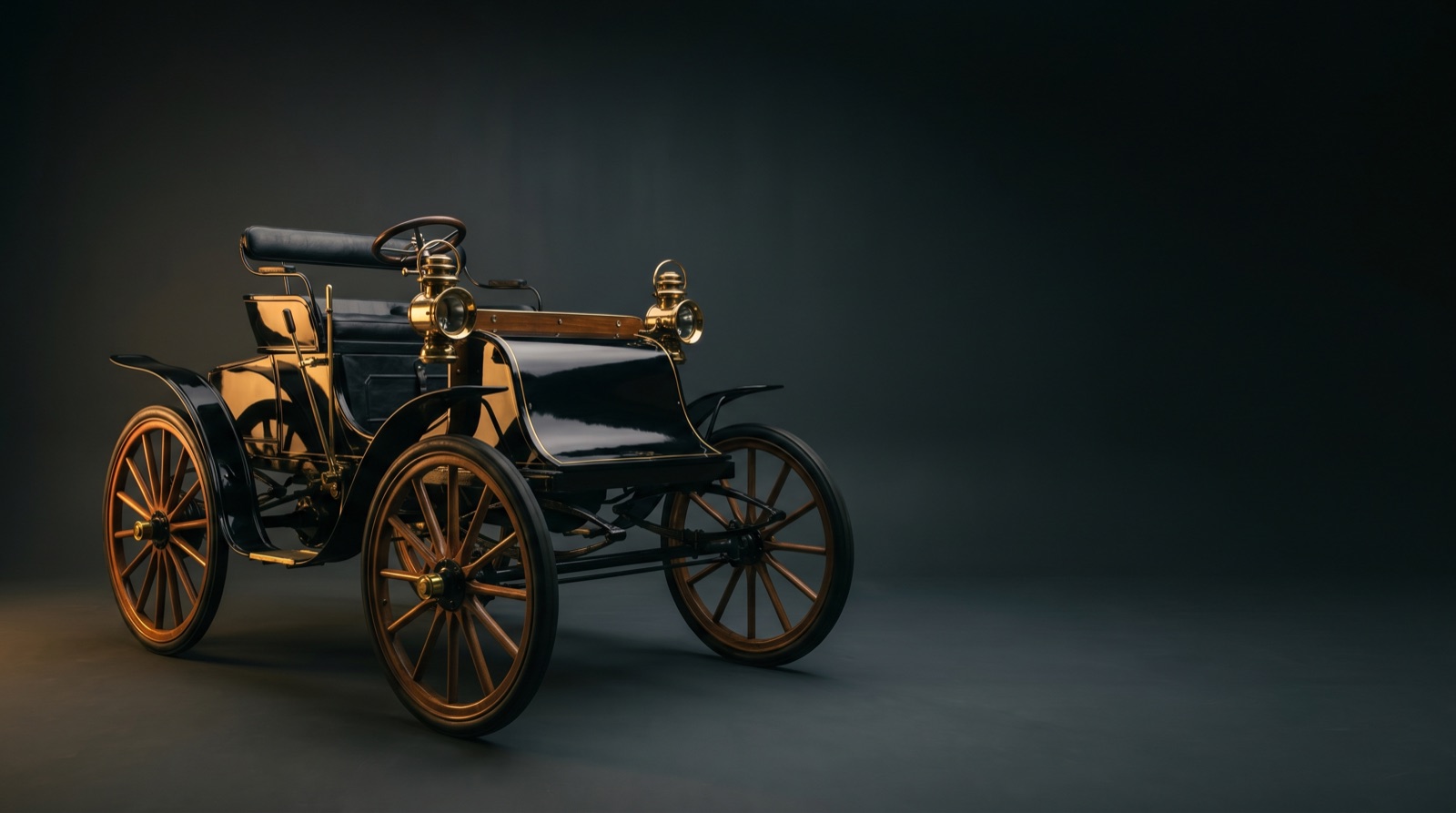
When cars first arrived, nobody had a word for them. So we borrowed one. We called them horseless carriages, because everyone knew what a carriage was, and this was a carriage without the horse. We measured them in horsepower. More than a century later, you still buy an engine rated in horsepower. The language of the thing we replaced stuck to the thing that replaced it.
That is exactly where most people sit with AI right now.
Your frame for AI is chatting via your keyboard. You put text in, you get text back, you repeat. Even when you talk instead of type, you are still inside that frame: a back-and-forth conversation, one exchange at a time, you steering every step. It feels like the whole point of the tool. It is the horseless carriage stage. A new category of thing, described in the language of the old one, so you only ever see a faster version of what you already had.
The frame you inherited
I watch this happen in every room I work in. Smart, accomplished people open an AI tool and ask it to write them an email, draft a LinkedIn post, tidy up a paragraph. Useful, and completely inside the old frame. Without realizing it, the old frame becomes a limiting factor.
The trouble with an inherited frame is that it is invisible. You do not notice you are thinking in horsepower. You just assume the road only allows carriages, so you keep asking for better carriages. Give the tool more context, and you get better chats. Sharpen your prompt, and you get a sharper reply. All of it real, all of it useful, and none of it the actual shift.
The shift is that AI now has hands.
What "operational" actually means
I call it operational AI. It can do anything a human being can do sitting at a keyboard with a mouse. Not describe the work. Do the work.
Here is the difference in practice. In the old frame, you ask AI a question and it answers. In the new one, you hand it a goal and step back. I might say: I want ten new clients in the next sixty days. I have a website, a newsletter, a social presence. Help me get there, and let us assume zero budget.
What happens next is not a reply. The AI takes that goal and breaks it down. It looks at where I am now, where the opportunities sit, what my positioning allows. Then it spins up what are called sub-agents, and they run at once: one doing research while another reads my website and a third drafts the plan, with a lead agent holding it all together. I love the movie Everything Everywhere All at Once, and that is the closest thing I have to a description of it: everything, everywhere, all at once. And it does not stop at a plan. It can build the website. It can write the funnel. It can install the lead-nurture sequences in your email platform. Real assets, built while you watch. No back-and-forth conversation needed.
When a leader sees this land for the first time, I can read it in their body. The shoulders drop. There is a long breath out. You mean I do not have to figure all of this out myself? I can just ask, and it goes and does it?
That is the frame shift. From an AI that talks to an AI that does. Once you have seen it, you cannot unsee how small the old frame was.
This is not a hammock on the beach
Now, the moment people grasp that AI can do the work, a lot of them lean too far in the other direction. They picture the hammock. Sitting on a beach with a drink while the machine runs their business for them. Make me this. Build me that. Come back to a finished company.
That is not the shift I am describing, and the difference matters.
The hammock is the myth of passive income wearing a new costume. It never worked for building a business, and it does not work here. There is no version of this where you close your eyes and the world sorts itself out. Operational AI does the doing. You still do the leading. You set the goal, you hold the standard, you decide what good looks like, you course-correct when it drifts. You are not asleep on the beach. You are present, directing a thing that can now act under your direction.
Discernment is critical.
I say it in every workshop: I do not teach AI, I teach human capacity. The tool now has hands. The judgment is still yours to bring, and it matters more now, not less, because a tool that can act on a vague instruction will act on a vague instruction.
If we bring confusion, it will amplify confusion. If we bring clarity, it will amplify that clarity.
This is what I mean when I say your thinking is the technology.
Where the new frame starts
Here is the strange thing about all of this operational magic. It runs on simple text. Plain files in plain folders. What makes the doing any good is the context underneath it, and that context is you: who you are, how you work, how you do not work, your values, who you serve, why you show up to the work at all. Most people have none of that written down. It lives in your head as a feeling, and a feeling is the one thing you cannot hand to a machine.
Write it down, and two things happen at once. The AI finally has something true to work from, so the doing stops being generic and starts being yours. And you get clearer about your own work in the process, which changes how you show up, whether a machine is involved or not.
So here is the turn. Next time you open an AI tool, catch yourself in the act. Are you asking it to talk, or asking it to do? If every request you make could be answered in a chat window, you are still driving the horseless carriage.
Pick one goal this week that you would normally break into a dozen little prompts, something like "fill next month's calendar with discovery calls." Then make the handover real. Open Claude Code, Anthropic's agentic tool. It ships as a normal desktop app now, no terminal required, and you talk to it in plain English. Point it at a folder holding a few plain text files about you, who you serve and what good looks like, then type in the whole goal and let it run. Stay close while it works and course-correct the way you would a capable new hire. That is you leading and the machine doing.
More than a century on, we still measure engines in horsepower, and it costs us nothing. Carrying the chat frame into AI is more expensive. The frame decides the size of what you ask for. Ask bigger.